Recent data reveals a significant shift in the automotive landscape. Plug-in EVs are now claiming a substantial 38% share of new passenger vehicle sales in China, a significant leap from just 6% in 2020. This rapid adoption of EVs is beginning to impact traditional fuel demand significantly.
The transition to electric isn’t limited to passenger cars. Electric power is making inroads into two and three-wheeled vehicles, with 70% of their total kilometers now being electric. Passenger vehicles are also transitioning, with over 5% of the fleet being battery-electric or plug-in hybrids, aided by increasingly stringent fuel-efficiency standards.
Commercial Vehicle Transition
The shift toward electrification extends to commercial vehicles as well. Even in the realm of heavy-duty vehicles, electric, fuel cell, and battery-swapping options are gaining ground, comprising 12% of light commercial vehicle sales and 4-5% of medium and heavy commercial vehicle sales. Projections suggest that over 10% of heavy commercial vehicles will be electric by 2025.
Ride-Hailing’s Impact
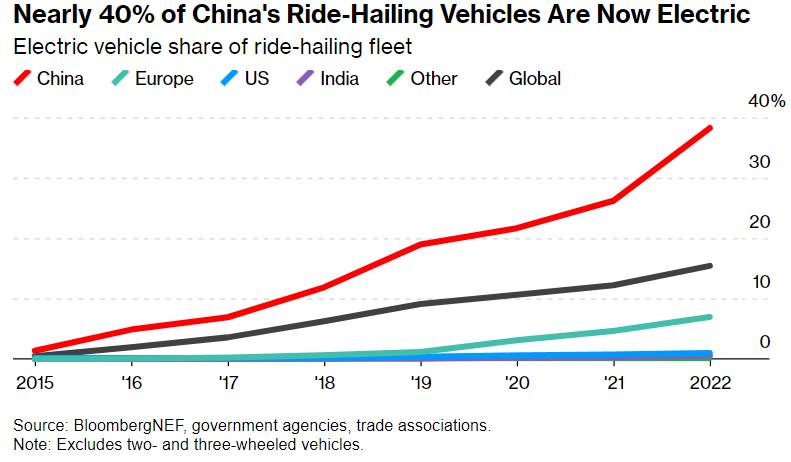
Sinopec’s announcement also spotlights the role of ride-hailing services in urban gasoline demand. Electric vehicles are increasingly prevalent in ride-hailing fleets, making up nearly 40% of vehicles. These electric ride-hailing vehicles are both environmentally friendly and economically advantageous, accounting for 50% of kilometers traveled on Didi’s ride-hailing platform in December.
Beyond Vehicle Numbers
The crux of Sinopec’s announcement lies in the transition from gasoline to electric power, which goes beyond vehicle numbers. It’s about electrifying kilometers traveled, as seen in Norway, where EVs cover more ground on average than their internal combustion counterparts. In China, the pace of this transition depends on how quickly kilometers traveled become electric, not just the number of electric vehicles.
Conclusion
Sinopec’s prediction signals a rapid transformation in China’s transportation and energy sectors. The surge in EV adoption, driven by economic factors and government policies, is reshaping the future of mobility and energy consumption. Gasoline demand may peak soon, marking a significant shift with global implications, presenting both challenges and opportunities for industry stakeholders. As electric vehicles gain momentum, the world watches closely to see how this revolution will reshape the future of transportation and energy.
Source: Bloomberg