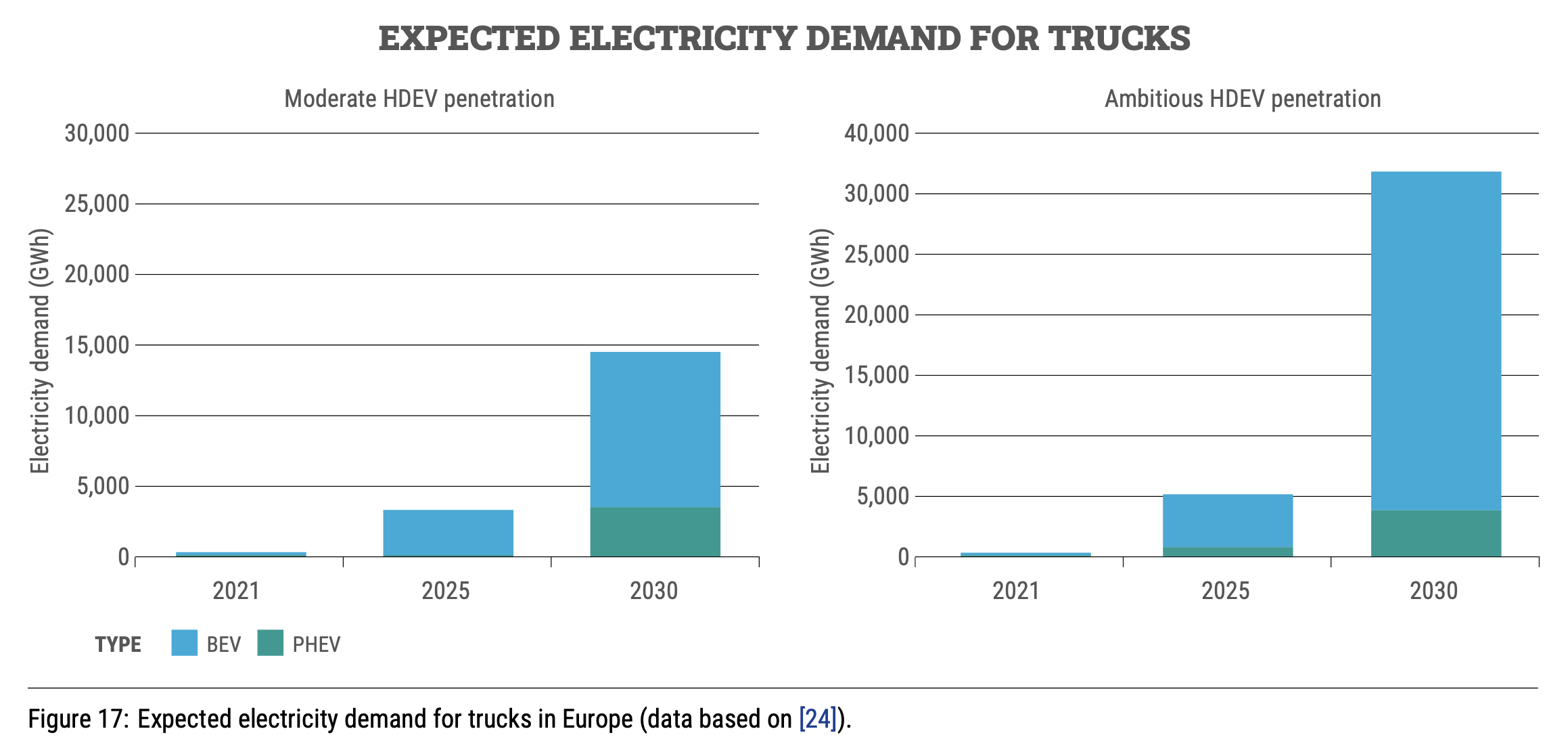
The paper estimates that electric buses, comprising Battery Electric Vehicles (BEV) and Plug-In Hybrid Electric Vehicles (PHEV), will demand up to 30 terawatt-hours (TWh) of electricity by 2030. Similarly, the electrification of trucks is expected to require almost 32 TWh of electricity by the same year. Together, buses and trucks will contribute to half of the total electricity consumption in the transport sector, highlighting their substantial role in the overall energy landscape.
Despite this rise, the electrification of heavy-duty vehicles (HDVs) like buses and trucks is projected to represent only about 3% of Europe’s final electricity consumption in 2030. This finding indicates that while the shift towards electric buses and trucks is significant, it is not expected to pose major challenges to the power system in terms of overall electricity demand.
However, the main issue lies in managing the additional power demand, especially considering the grid’s availability and capacity. The peak power demand is expected to surge, particularly during late evenings and night hours when vehicles return to depots.
ENTSO-E’s analysis extends to various aspects of electrification, including depot recharging, logistic hub charging, long-haul charging, and the use of hydrogen stations with electrolysers. The study emphasises the need for coordinated planning among grid operators, local authorities, and fleet managers to integrate electric buses and trucks seamlessly into the power system.
The paper concludes by highlighting the importance of smart charging strategies and demand response mechanisms to effectively manage the expected increase in electricity demand. Such strategies are crucial for mitigating potential grid challenges and ensuring a smooth transition to a more electrified transport sector.
Source: Deployment of Heavy-Duty Electric Vehicles and their Impact on the Power System | ENTSO-E