In Europe, approximately 26% of road vehicles are part of a fleet. This category encompasses a wide range of vehicles, including trucks that are responsible for transporting a significant portion of land freight (77%) and buses that account for the majority of public transport journeys (56%). This emphasizes the substantial influence that fleet operations have on our daily lives and the overall economy.
Disproportionality means opportunity
Despite representing only a quarter of vehicles, fleets are responsible for 50% of road transport emissions. This disproportionality presents an excellent opportunity for reducing emissions by transitioning a relatively small percentage of vehicles to electric alternatives. Electrifying just 25% of road vehicles could potentially cut emissions by 50%, which would be a substantial step toward addressing climate change and improving air quality.
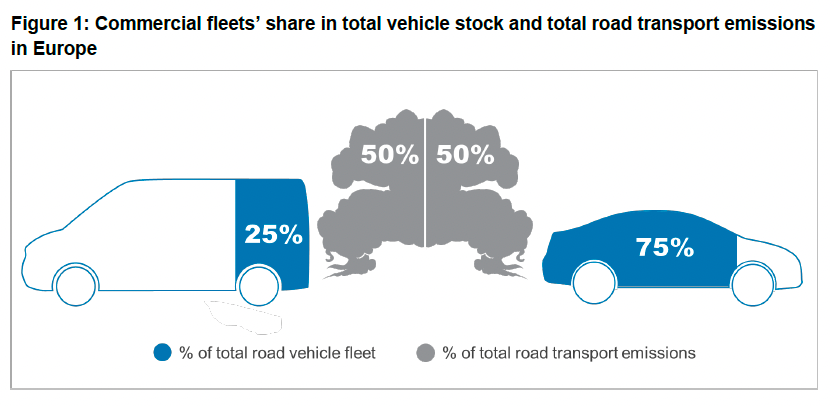
Moreover, fleet vehicles typically have a shorter lifecycle than private vehicles. They often end up in the second-hand market after just three to five years of use. This high rate of turnover can accelerate the decarbonization of the transportation sector. As fleet operators make decisions about purchasing new vehicles, they have a direct impact on the composition of the second-hand market, influencing the availability of electric vehicles for a broader range of consumers.
Fleet electrification is also central to reducing air pollution, particularly at the local level. Road transport is one of the main sources of air pollution, with high associated costs for society. For instance, in England, the costs of air pollution could rise to £5.3 billion by 2035 if not adequately addressed. Fleet electrification can play a significant role in mitigating these costs and improving public health.
Strategically transitioning to EVs
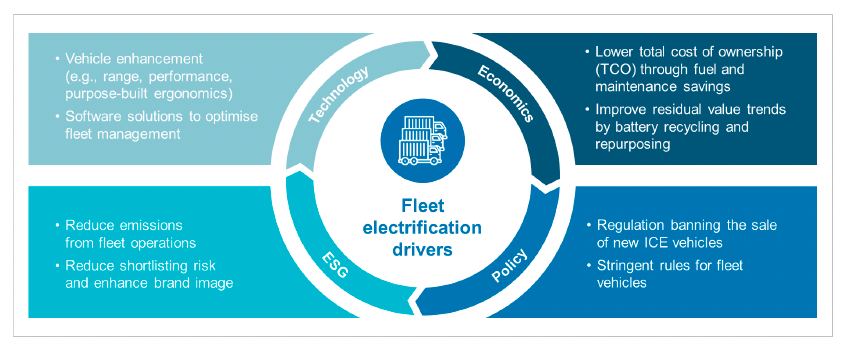
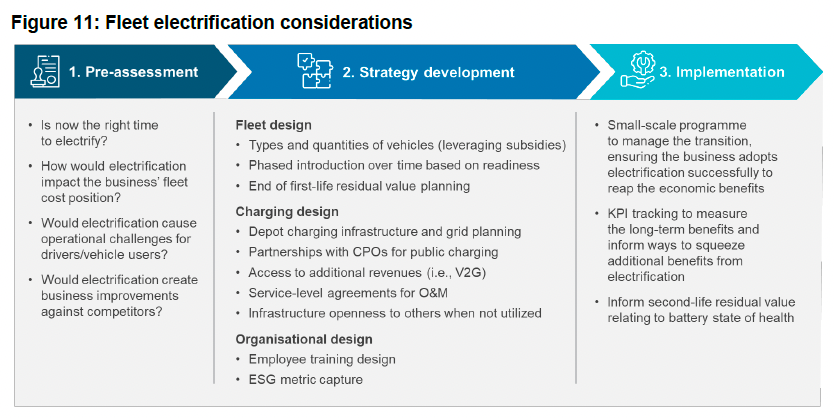
The pressure to decarbonize fleets requires operators to make informed decisions about when and how to transition to electric vehicles. This transition should be designed to capture the most value while minimizing risks. To make this shift, operators need to conduct thorough assessments considering factors like geographical location, economic feasibility, infrastructure availability, competitive positioning, and access to partners, among others.
An all-encompassing economic analysis is vital to make electrification a success story. If electrification is found to be economically sustainable, fleet operators must define a detailed strategy capable of supporting the transition within a predefined timeframe while minimising operational disruptions. Such a strategy must cover all aspects of fleet operations, including depot and charging infrastructure, vehicle selection, route planning, and organizational restructuring.
Partnerships
If electrification is not yet economically sustainable for a specific fleet, operators have several options to plan for the future. Partnerships across the value chain can help share risks and reduce costs. Coordination among operators to share electric vehicle procurement and infrastructure can provide desirable scale economics, driving down costs for all operators. Collaborating with charging providers can yield advantageous terms for tailored charging solutions that cover both depot and public charging. Engaging with policymakers to advocate for supportive regulations and subsidies is another avenue to explore.
Fleet electrification is a crucial element in the effort to reduce emissions at global, national, and local levels. Fleet operators, policymakers, and stakeholders need to collaborate to promote sustainable electrification, reduce emissions, and create a more environmentally friendly future for road vehicle fleets. The electrification timeline should be defined on a case-by-case basis. By making informed decisions and leveraging partnerships and supportive policies, the transition to electric fleets can be a success story with significant environmental and economic benefits.
Get ‘free of charge’ access to more than 700 valuable EV Market Insights via www.EVMarketsReports.com, the world’s largest e-Mobility Reports and Outlooks database. Enjoy reading!