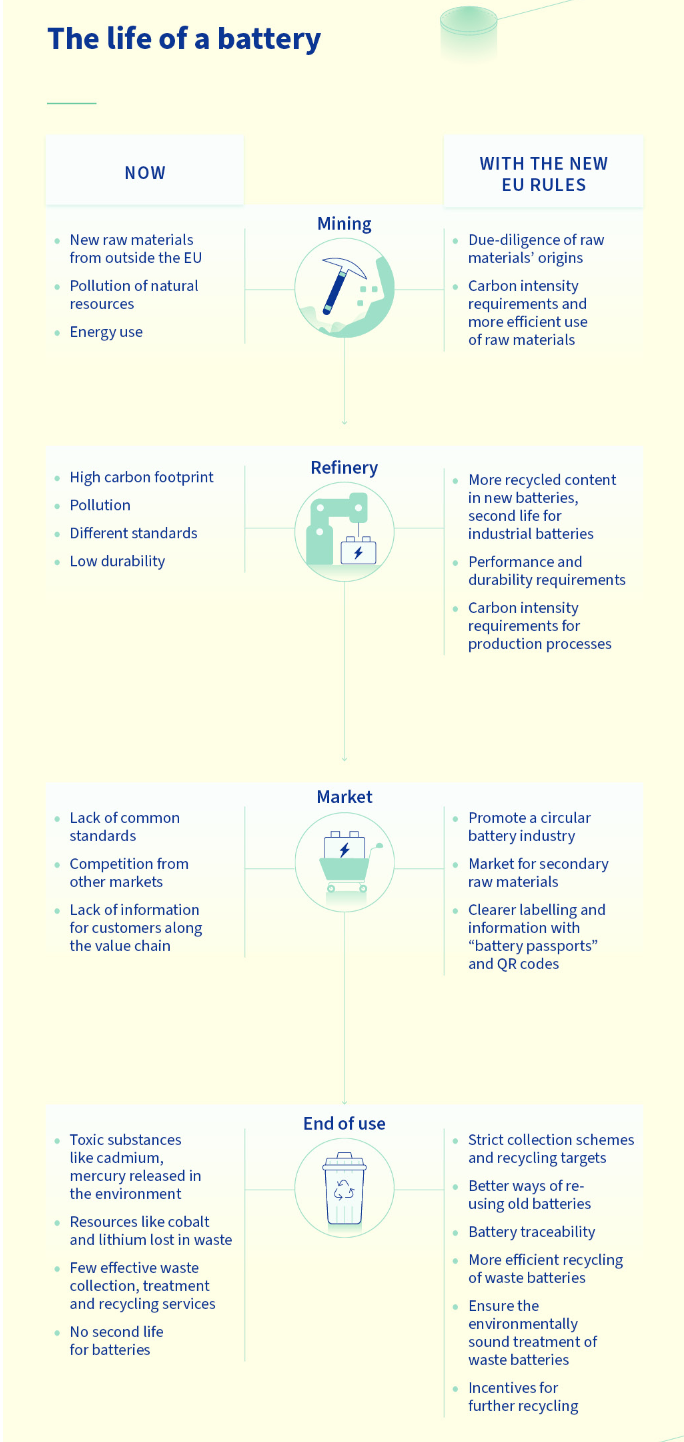
Key provisions of the regulation include ambitious end-of-life requirements that set collection targets and obligations, material recovery targets, and extended producer responsibility. By 2030, producers will be required to collect at least 73% of waste portable batteries and 61% of waste batteries for light means of transport, such as electric bikes and scooters.
The new legislation places a particular emphasis on the responsible management of lithium, a key component in modern batteries. The regulation sets targets for the recovery of lithium from waste batteries, aiming for 50% by the end of 2027 and 80% by the end of 2031, with room for adjustments based on market and technological developments.
To encourage sustainable practices, the regulation mandates minimum levels of recycled content in industrial, EV, and SLI batteries, with initial targets set at 16% for cobalt, 85% for lead, 6% for lithium, and 6% for nickel. Additionally, nickel-cadmium batteries will be subject to a recycling efficiency target of 80% by the end of 2025, while other waste batteries aim to achieve 50% recycling efficiency by the same date.
Consumer empowerment is also at the heart of the regulation, with provisions requiring that, by 2027, portable batteries incorporated into appliances must be easily removable and replaceable by end-users. Furthermore, batteries for light means of transport will need to be replaceable by independent professionals, providing greater convenience and sustainability for users.
With an eye towards fair competition and safer products, the regulation introduces performance, durability, and safety criteria for batteries, along with strict restrictions on hazardous substances like mercury, cadmium, and lead. Batteries will also come with mandatory information on their carbon footprint, helping consumers make informed and sustainable choices.
To improve market functioning, the regulation includes labeling and information requirements, such as indicating battery components and recycled content. An electronic “battery passport” and a QR code will be implemented to ensure traceability and transparency in the battery supply chain, with labelling requirements taking effect by 2026 and the QR code by 2027.
Furthermore, the regulation establishes stringent due diligence rules for operators, ensuring that the source of raw materials used in batteries is verified. In recognition of the varied capacities of market players, small and medium-sized enterprises (SMEs) will be granted an exemption from these due diligence rules.
The new European regulation sets the stage for a cleaner, more sustainable battery industry while protecting consumers and encouraging innovation. By implementing these measures, the EU is leading the way towards a greener future and a more circular economy, reinforcing its commitment to combat climate change and protect the environment for generations to come.
Source: European Council