Europe is facing a triple challenge: the need to source these critical minerals responsibly, ensuring diverse markets, and doing so sustainably. The demand for these minerals, essential for green technologies such as electric vehicles and renewable energy systems, is expected to quadruple by 2040. However, current projections show that even with maximised extraction, refining, and recycling within Europe, over half of the required minerals will still need to be imported.
A significant concern is the concentration of supply from third countries, with China dominating the processing of rare earth elements and other nations like Chile and the Democratic Republic of Congo being major suppliers. This dependency poses risks, including resource nationalism and export restrictions.
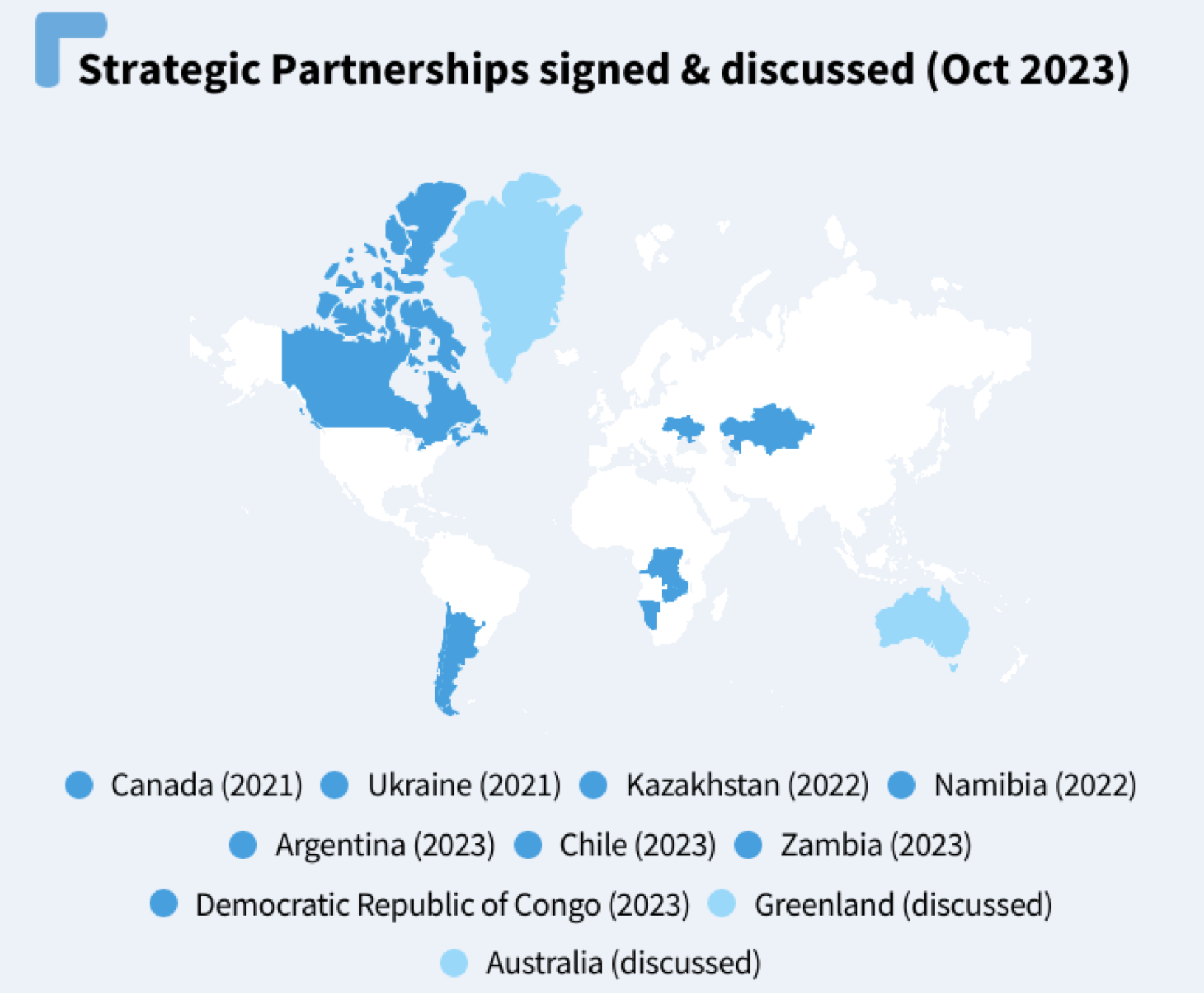
To mitigate these challenges, the EU has been forging Strategic Partnerships with countries like Canada, Ukraine, Namibia, Kazakhstan, Argentina, Chile, Zambia, and the Democratic Republic of Congo. These partnerships aim to integrate value chains, foster collaborative projects, and maintain high social and environmental standards. However, the paper emphasises the urgency for Europe to catch up with global competitors like China, which has significantly invested in global minerals projects.
Europe’s approach focuses on supporting green industry plans in resource-rich countries, emphasising technology transfer and responsible mining practices. The Strategic Partnerships offer a promising way forward, but they require rapid and substantial engagement from Western car and battery makers and the metals industry.
The paper concludes that for these partnerships to be successful, the EU must support local green industrial value chains and responsible sourcing practices, establish a robust funding framework, and actively involve European companies. It also stresses the importance of harmonising standards and working collaboratively on a global scale to secure sustainable mineral supply chains.
This briefing from T&E provides a comprehensive overview of the current situation and offers clear recommendations for Europe to secure its supply of critical raw materials in a sustainable and socially responsible manner.
Source: EU Strategic Partnerships: How to shape secure, diverse and sustainable trade in critical minerals | Transport & Environment