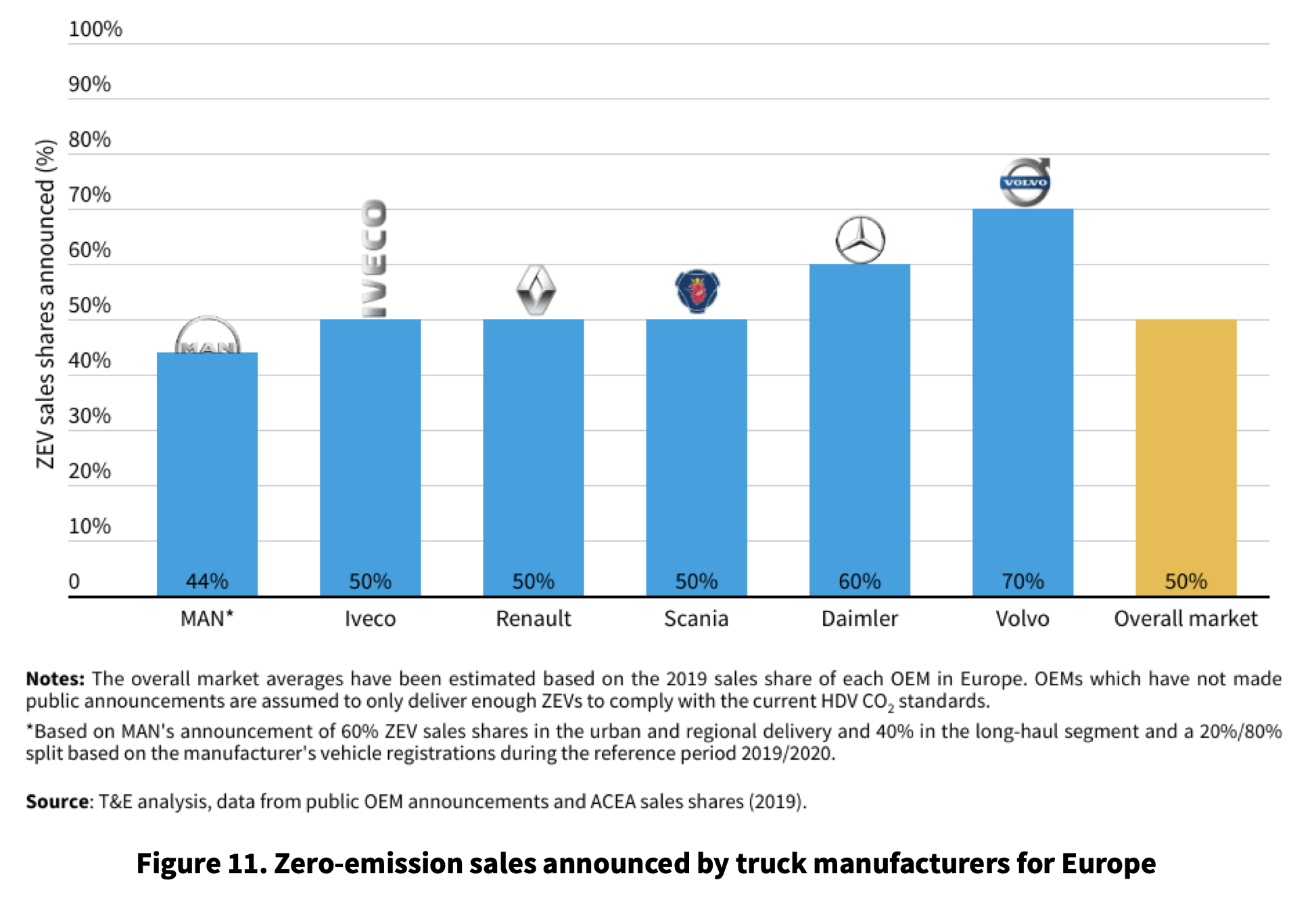
According to recently released statistics based on the so-called “cleanroom talks” between German government officials and European truck manufacturers, the industry is ramping up even faster, with 63% of new truck sales in Europe expected to be zero-emission in 2030 These announcements, though, are entirely optional. To guarantee that these announcements come to pass, strict CO2 standards are required.
There is increasing consensus among vehicle manufacturers that BEVs will play a dominant role in decarbonising the heavy-duty sector. Depending on the jurisdiction and available national policy incentives, studies by environmental organizations, research groups, and truck manufacturers predict that long-haul BEV TCO parity will occur in Europe by or by the middle of 2020.
Daimler has declared that starting in 2039, it will solely offer zero-emission trucks in Europe. Scania aims to go totally electric by 2040 and has committed to selling zero-emission trucks and buses by that time under the Global Memorandum of Agreement.
Source: Truck CO2: Europe’s chance to lead | Transport & Environment