The European Union’s commitment to phasing out diesel and petrol vehicles in favor of battery electric (BEV) and fuel cell vehicles has set the stage for a surge in demand for lithium-ion (Li-ion) batteries. According to the report, up to 60% of all new cars sold in 2030 are expected to be BEVs, rising to a 100% share by 2035. This regulatory push, combined with climate-conscious policies, has led to significant investments in Europe’s battery industry.
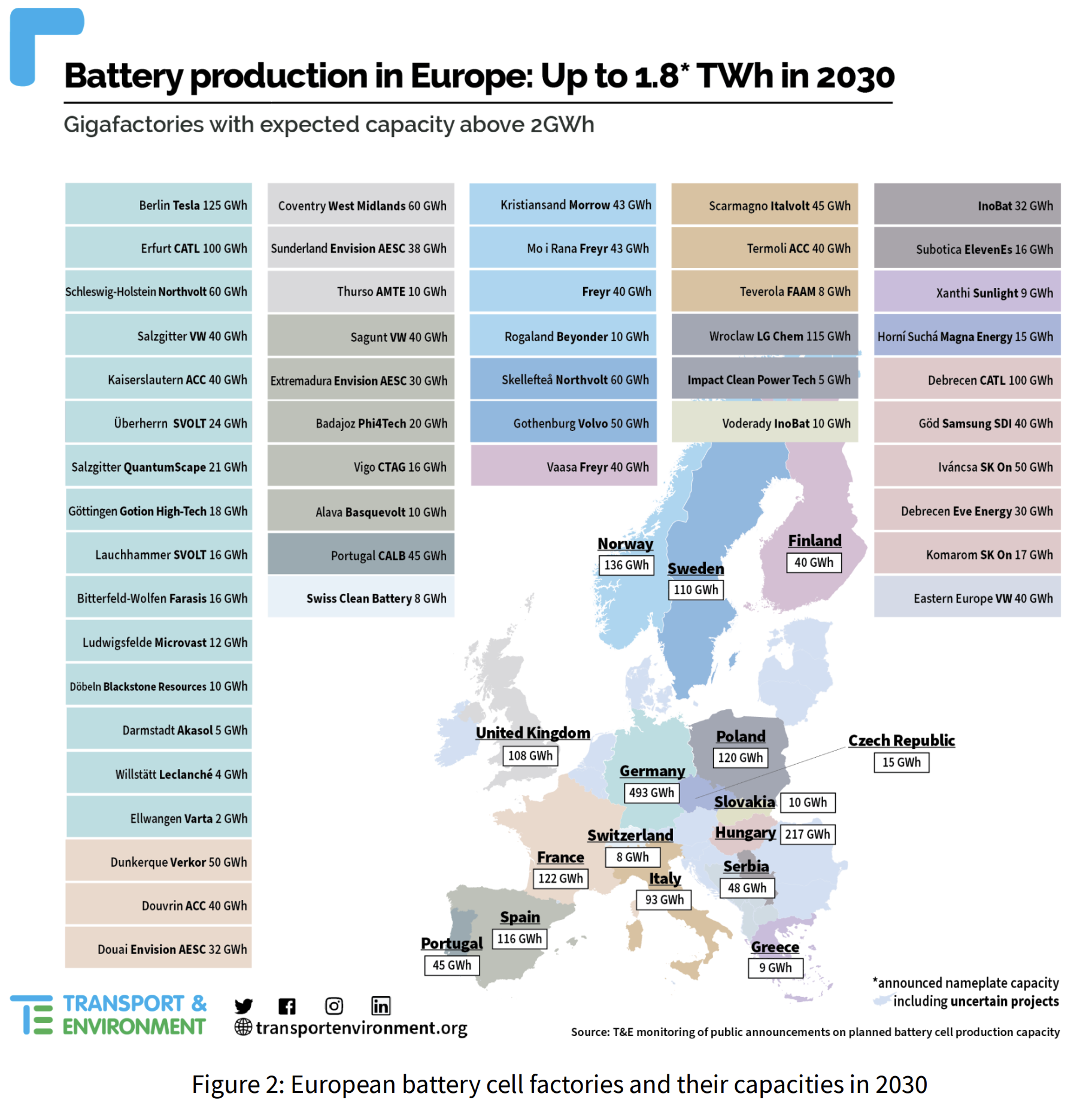
Europe’s strides in the battery value chain are evident, as the continent is projected to produce over half of the world’s battery electric cars by 2030, in line with the recently agreed -55% CO2 target for carmakers. Furthermore, Europe’s efforts to establish battery cell production within its borders have been successful, with Poland, Hungary, Germany, and Sweden emerging as key players. T&E’s analysis indicates that Europe could achieve self-sufficiency in battery cells, meeting 100% of its Li-ion battery cell demand by 2027.
The report also emphasizes Europe’s potential in producing cathode active materials, such as cobalt and nickel, which are essential components of batteries. European projects, primarily in Germany, Poland, and Sweden, are positioned to take the lead in this crucial aspect of the battery value chain.
While Europe’s progress is promising, the report also raises concerns about potential challenges. Notably, the US Inflation Reduction Act (IRA) and China’s longstanding support for its battery and electric vehicle industry have led to increased investment in North America, putting pressure on Europe’s position in the global battery market. The report underscores the need for a robust industrial strategy and targeted policies to ensure that Europe maintains its competitive edge.
To address these challenges, the report suggests a stronger focus on the battery value chain and the implementation of a comprehensive industrial policy akin to the US IRA. T&E recommends accelerating pre-2030 ambitions and implementing an EU Fleets mandate for corporate BEV registration by 2026/7. This, the report contends, would create a more favorable business environment for the battery value chain.
In conclusion, the report underscores both the remarkable progress and the potential vulnerabilities of Europe’s battery industry. As the world races to transition to a cleaner and more sustainable energy landscape, Europe must leverage its strengths and address its weaknesses to ensure a prominent role in the global clean technology revolution.
Source: How not to lose it all | Transport & Environment