The recently released Global EV Outlook 2023 by the IEA highlights the pressing requirement for more public charging points to facilitate the expansion of EVs. As of the end of last year, the total number of public charging points worldwide was 2.7 million. In contrast, over 10 million EVs were added to global roads in 2022 alone, with an estimated 14 million more expected to be sold this year.
Disparities in the availability of public charging infrastructure exist among different countries. South Korea stands out with a relatively abundant number of charging points, boasting one charging point for every two EVs in the country based on IEA data from last year. Conversely, the United States had just one public charging point for every 24 EVs in 2022. Unsurprisingly, Forbes published survey results revealing that more than 60% of American EV owners experienced “range anxiety,” worrying about the distance they could travel before requiring a recharge.
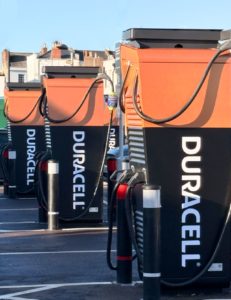
For EV drivers residing in areas with limited public chargers, the reliance on slower alternating current (AC) chargers at home or work becomes more prevalent. While these AC chargers get the job done over a few hours, the ultimate solution to alleviate range anxiety lies in the availability of public stations equipped with faster direct current (DC) chargers. With DC chargers, EV drivers can replenish their vehicle’s battery in as little as 20 minutes.
The growing interest in EVs, coupled with governmental regulations promoting clean energy solutions, has spurred momentum to expand both the quality and quantity of EV charging infrastructure. Innovations in charging technology, such as bi-directional charging, which enables EV batteries to provide power to other devices or the grid, further contribute to this evolution.
The global EV charging infrastructure market is expected to witness remarkable growth, projected to reach a value of US$221.9 billion by 2030, up from US$25.56 billion in 2022. This represents a compound annual growth rate (CAGR) of 31.02% between 2023 and 2030. This market encompasses residential and commercial EV charging applications, and the electrification of heavy vehicles, including trucks, is predicted to drive the development of high-power “megachargers” with outputs of 1 MW or more. Additionally, advancements in smarter EV chargers, offering enhanced automation, wireless capabilities, and greater convenience to EV owners, are already underway.
As the global EV market continues to thrive, the expansion and enhancement of EV charging infrastructure will be vital in supporting the transition to a sustainable and electric future. Governments, industries, and stakeholders must collaborate to meet the surging demand for public charging points and embrace innovative solutions that further facilitate the widespread adoption of EVs.
Source: Global EV Outlook 2023 | The IEA