The study assesses different electric drive technologies, including battery electric trucks (BEVs), fuel cell trucks (FCEVs), and overhead catenary trucks (O-BEVs). Among these, BEVs stand out as leaders due to their technical feasibility and available charging infrastructure. Although overhead catenary trucks have potential cost advantages, their use is limited by infrastructure constraints. Meanwhile, the adoption of FCEVs hinges on uncertain hydrogen pricing.
To accelerate the adoption of electric heavy-duty vehicles, the study recommends implementing a CO2-based truck toll and expanding public energy supply infrastructure. With comprehensive charging infrastructure in place, the study anticipates a significant reduction in greenhouse gas emissions from road freight transport. This aligns with Germany’s national climate targets and surpasses proposed EU objectives for 2030.
The study takes a detailed approach to estimate the required energy infrastructure. It allocates modeled energy demand for road freight transport to regional traffic demand using a location grid. By distinguishing between various charging point types through route chain analysis, the study suggests that depot charging stations will provide about 55% of the required energy. However, substantial infrastructure development is essential for public Night Charging Systems (NCS) and Megawatt Charging Systems (MCS), especially until 2035.
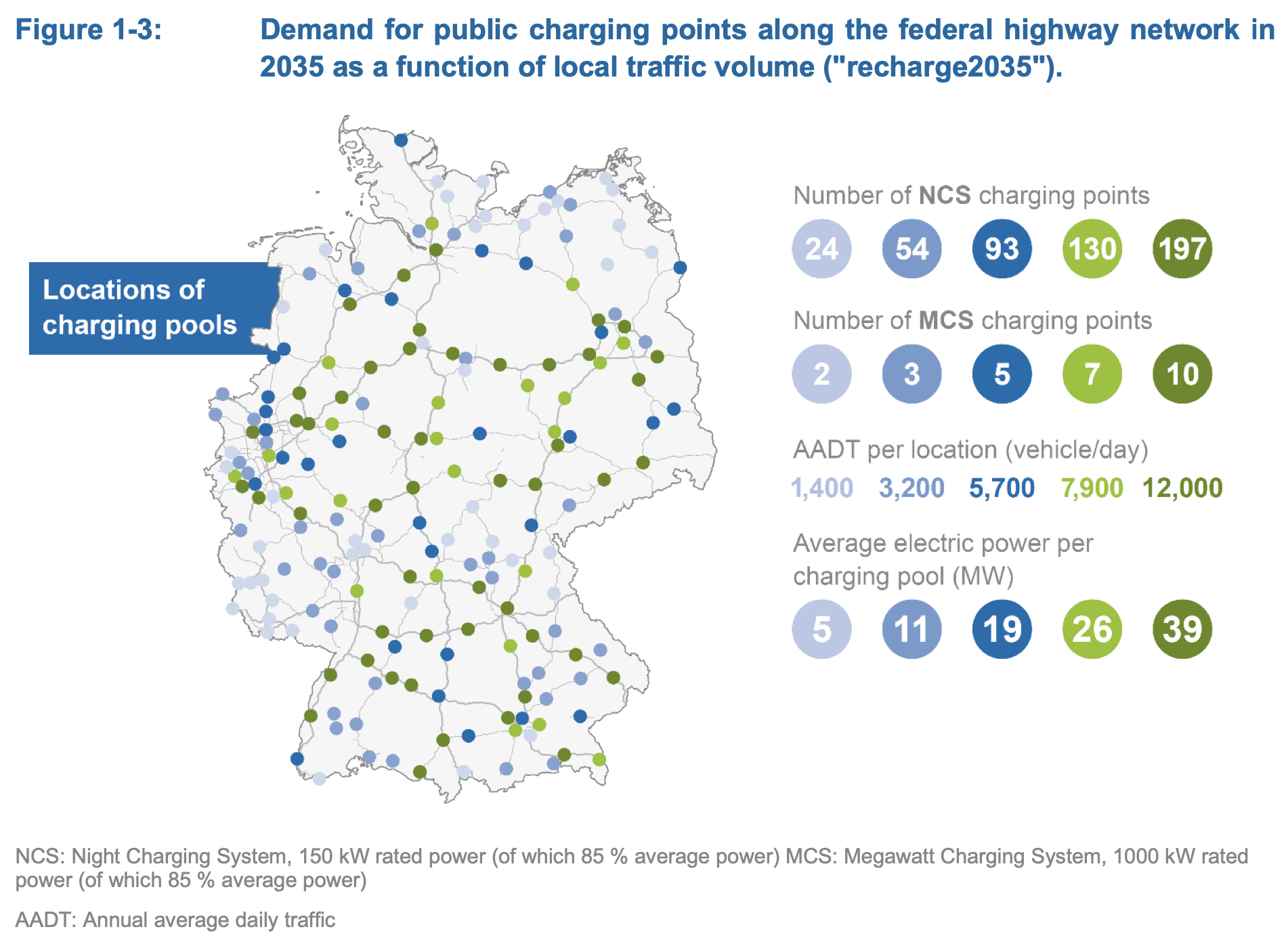
Meeting regional demands, including those of the federal highway system, requires installing 2,000 MCS charging points and 40,000 NCS charging points in total. It’s important to note that the installation of MCS charging points involves numerous labor-intensive connections to the high-voltage grid due to their high power demand. This infrastructure assessment is crucial for facilitating the transition to electric heavy-duty vehicles and achieving the study’s emission reduction goals.
Source: StratES – Scenarios for the Electrification of Road Freight Transport | the Öko-Institut