The comprehensive study examined the EV policies of 22 Indian states and union territories, shedding light on the diverse strategies being employed to promote electric mobility at the regional level. Among the key findings, the report highlights the pivotal role that states can play in the successful implementation of these incentives.
Green zones, a novel concept introduced by states such as Andhra Pradesh, Haryana, Kerala, Maharashtra, Madhya Pradesh, Punjab, and West Bengal, have taken center stage in this endeavor. These green zones, designed to be established in phases, offer a controlled environment for assessing needs and channeling resources effectively. With strategic planning involving geographical coverage, stakeholder engagement, and vehicle segment inclusion, green zones are poised to drive tangible benefits for EV consumers.
Notably, Kerala and West Bengal have proposed groundbreaking green zone pilot programs in their EV policies, aiming to create exemplars of sustainable urban transportation. These initiatives are set to be underpinned by robust charging infrastructure, a key factor in promoting electric mobility. States like Andhra Pradesh, Haryana, Maharashtra, Madhya Pradesh, Punjab, and West Bengal have committed to offering charging infrastructure support within their green zones, further reinforcing their commitment to fostering EV adoption.
Local authorities are also stepping up their efforts to make EVs a more attractive option for drivers. The report highlights the ingenious utilization of reserved parking spots as a means to encourage EV purchases. Regions such as Kerala, Ladakh, Maharashtra, Meghalaya, Orissa, Punjab, and Telangana have integrated reserved EV parking into their policies. Moreover, the adoption of dedicated EV parking spots with integrated charging stations is streamlining the charging process for EV owners, potentially accelerating the shift towards electric mobility.
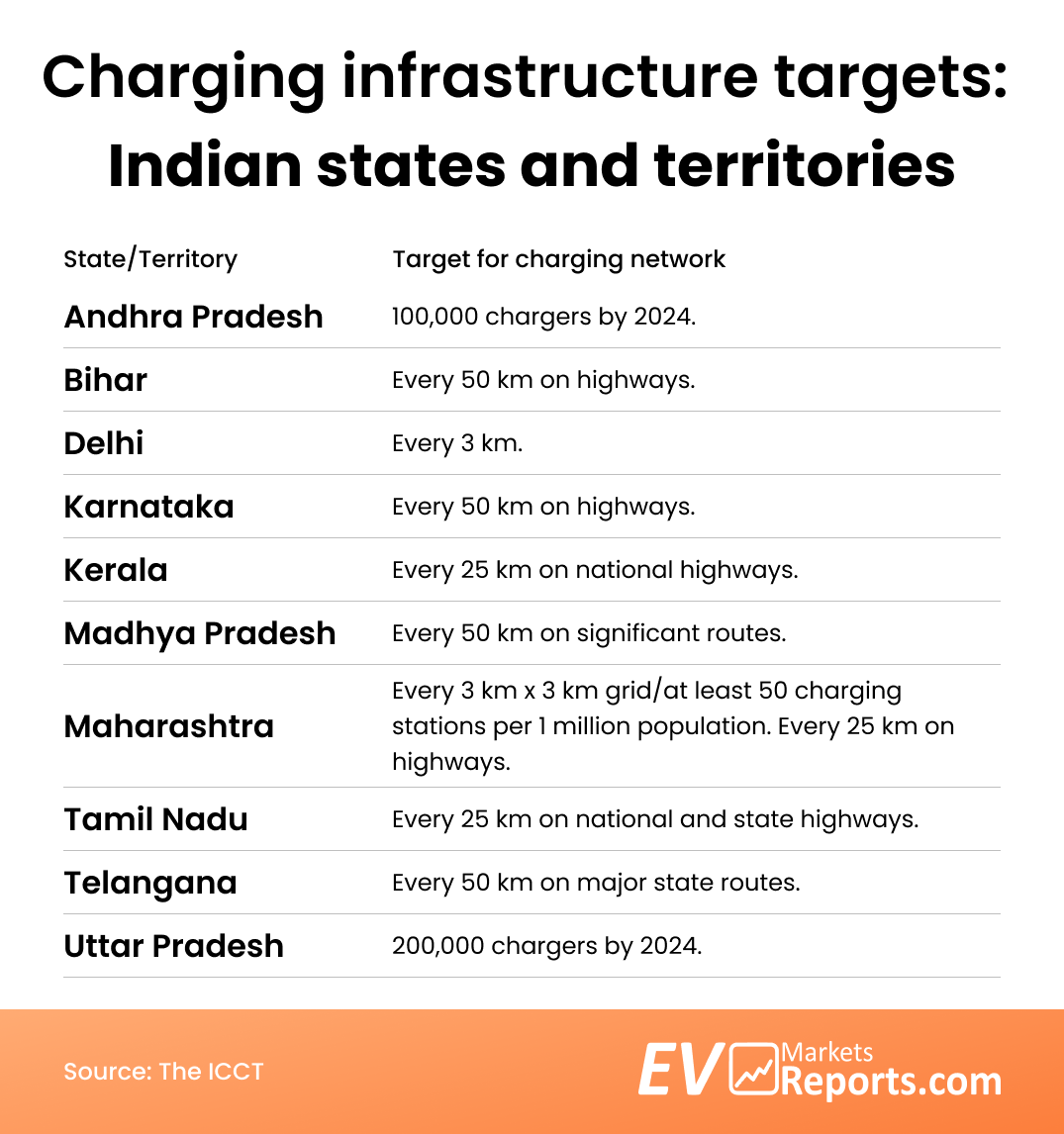
Additionally, state governments are demonstrating their dedication to charging infrastructure development, with clear targets for public charger installation in densely populated areas and along high-traffic routes. This approach, coupled with dynamic collaboration between state nodal agencies and relevant stakeholders, is set to ensure seamless charging access at public spaces and semi-public locations.
As India advances through the stages of EV adoption, the evolution of charging infrastructure strategies is gaining prominence. The government of Delhi has even issued a directive mandating commercial establishments and institutions with sizable parking facilities to allocate dedicated parking spaces and charging infrastructure for EVs.
While the report underscores the commendable progress made, it also identifies areas for further improvement. Encouragingly, states like Gujarat have streamlined charging infrastructure installation by offering no-objection certificates to housing and commercial establishments interested in setting up charging stations with designated parking spaces.
As the world embraces sustainable transportation solutions, India’s states are clearly at the forefront of driving change, harnessing non-fiscal incentives to forge a path toward an electrified future. With innovative policies and a commitment to collaboration, these regions are setting a formidable example for sustainable mobility on a global scale.
Source: Comparative evaluation of non-fiscal incentives to promote electric vehicles across Indian states and union territories | The ICCT