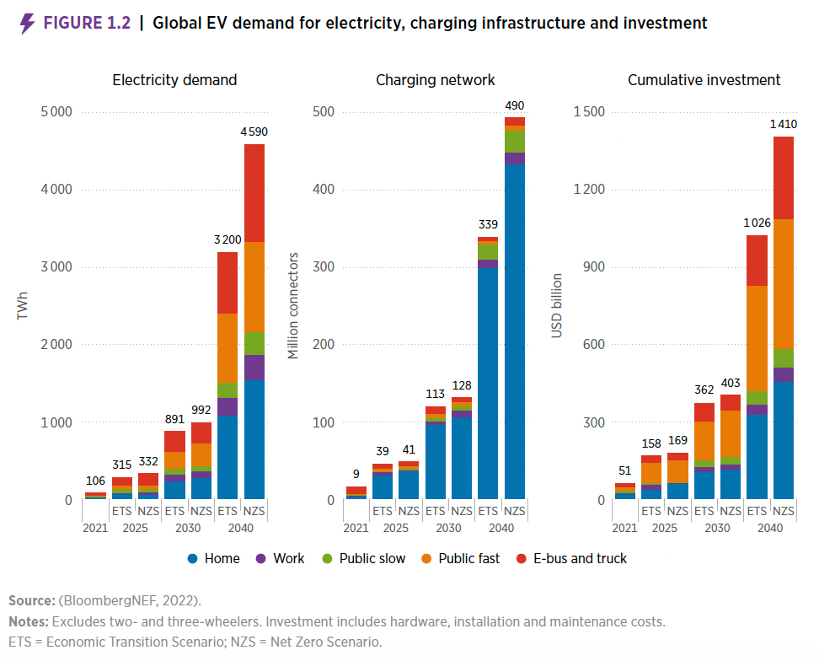
As EV adoption surges, challenges arise for the electricity system due to increased demand. IRENA estimates that electricity’s share of transport energy consumption will rise to 7% by 2030 and 52% by 2050. This growth translates to global electricity demand from EVs reaching 3,000 terawatt hours (TWh) by 2040 in BloombergNEF’s Economic Transition Scenario.
The distribution of EV charging is expected to include 35% at home, 24% at public fast charging stations, 7% at slow public chargers and workplaces, and 27% for ultra-fast charging for e-buses and trucks. The transition to EVs necessitates significant investments in charging infrastructure, with IRENA’s 1.5°C Scenario requiring $9 trillion in cumulative investments by 2050.
The importance of smart electrification for decarbonizing mobility
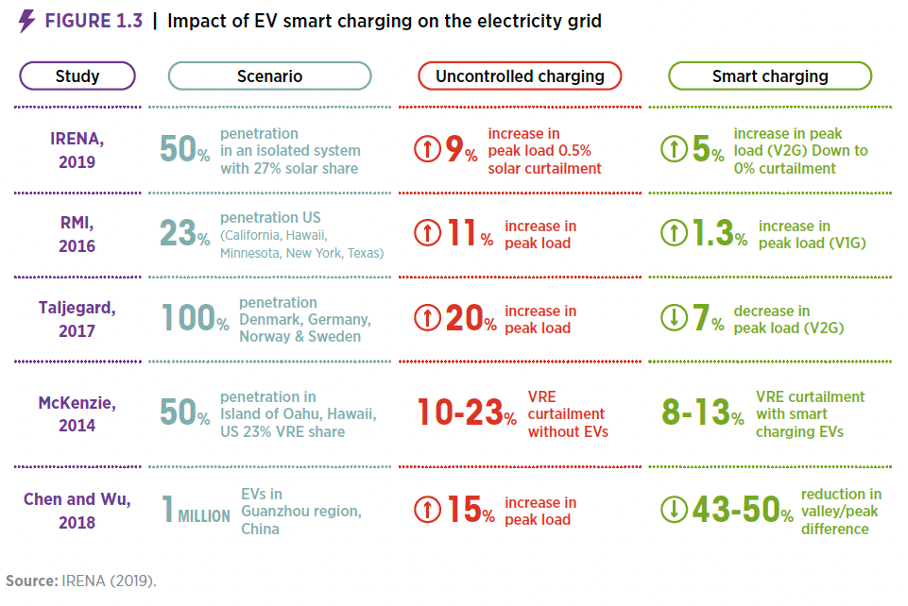
However, integrating EVs into the power grid with renewable-based electricity presents challenges. Smart electrification strategies are crucial to manage renewable integration, reduce peak loads, and ensure grid stability. Smart charging optimizes the process based on factors like electricity prices, grid congestion, and battery health. Bidirectional charging (vehicle-to-grid, or V2G) further enhances benefits by allowing EVs to supply power back to the grid.
On the distribution grid level, smart charging helps prevent overloads, improves voltage quality, and decreases energy losses. The operational advantages of smart charging include cost savings, CO2 emission reductions, peak load reductions, and less curtailment of variable renewable energy. However, misconceptions and challenges persist. Policy makers must overcome barriers like vehicle costs, charging infrastructure, payment systems, cybersecurity, and complicated regulations.
Some recommendations
Policy makers may have misconceptions or blind spots that hinder the deployment of sound strategies. Some recommendations:
- Smart charging doesn’t always require bidirectional capabilities. Smart charging without bidirectional capabilities can still deliver benefits like peak load reduction and should be implemented promptly.
- Charging infrastructure should be widespread and not just focus on fast charging. Most charging happens at home or work, emphasizing the need for accessible charging points everywhere.
- Charging infrastructure standardization and interoperability are essential. Consistent standards ensure compatibility and prevent fragmentation.
- Consideration of mobility trends is necessary for effective electrification strategies. Trends like remote work and shared mobility impact EV usage patterns.
- Co-locating EV charging with solar generation can alleviate grid impact. Workplace charging combined with solar arrays can optimize EV charging times and reduce grid stress.
The Toolbox
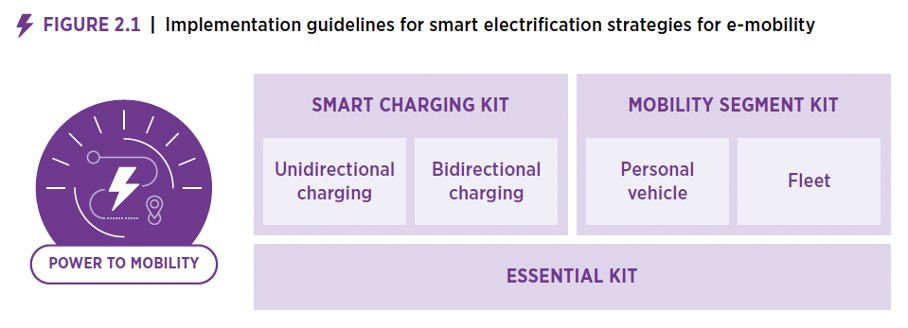
To guide policy makers in formulating smart electrification strategies in their own contexts, IRENA proposes a toolbox, comprising three main toolkits: the essential kit, the smart charging kit, and the mobility segment kit. The essential kit covers key infrastructure, regulations, and interoperability. The smart charging kit ensures smart implementation, addressing uncontrolled charging’s impact on the power system. It distinguishes between unidirectional (V1G) and bidirectional (V2G) charging. The mobility segment kit tailors strategies for personal vehicles and fleets, with a focus on innovative solutions for each category.
Opportunities and challenges
In conclusion, the widespread adoption of EVs brings both opportunities and challenges. Smart electrification strategies, including smart charging and integrating renewable energy, are vital to managing increased demand and realizing the potential benefits of EVs. Policymakers must address misconceptions and focus on standardization, accessibility, and innovative business models to facilitate this transition effectively.
Get ‘free of charge’ access to more than 250 valuable EV Market Insights via www.EVMarketsReports.com, the world’s largest e-Mobility Reports and Outlooks database. Enjoy reading!