Growing Emissions from Off-Road Machinery
The briefing sheds light on the concerning rise in emissions from off-road equipment, which has not been subject to the same stringent regulations as on-road vehicles. For instance, California has reported that off-road diesel engines are responsible for a substantial portion of emissions, contributing to 29% of diesel particulate matter and 11% of nitrogen oxides emissions within the state. The situation is similar in China, where off-road diesel equipment has been a major contributor to particulate matter emissions and accounts for a significant portion of diesel fuel consumption.
Strategies for Incentivizing Zero-Emission Transition
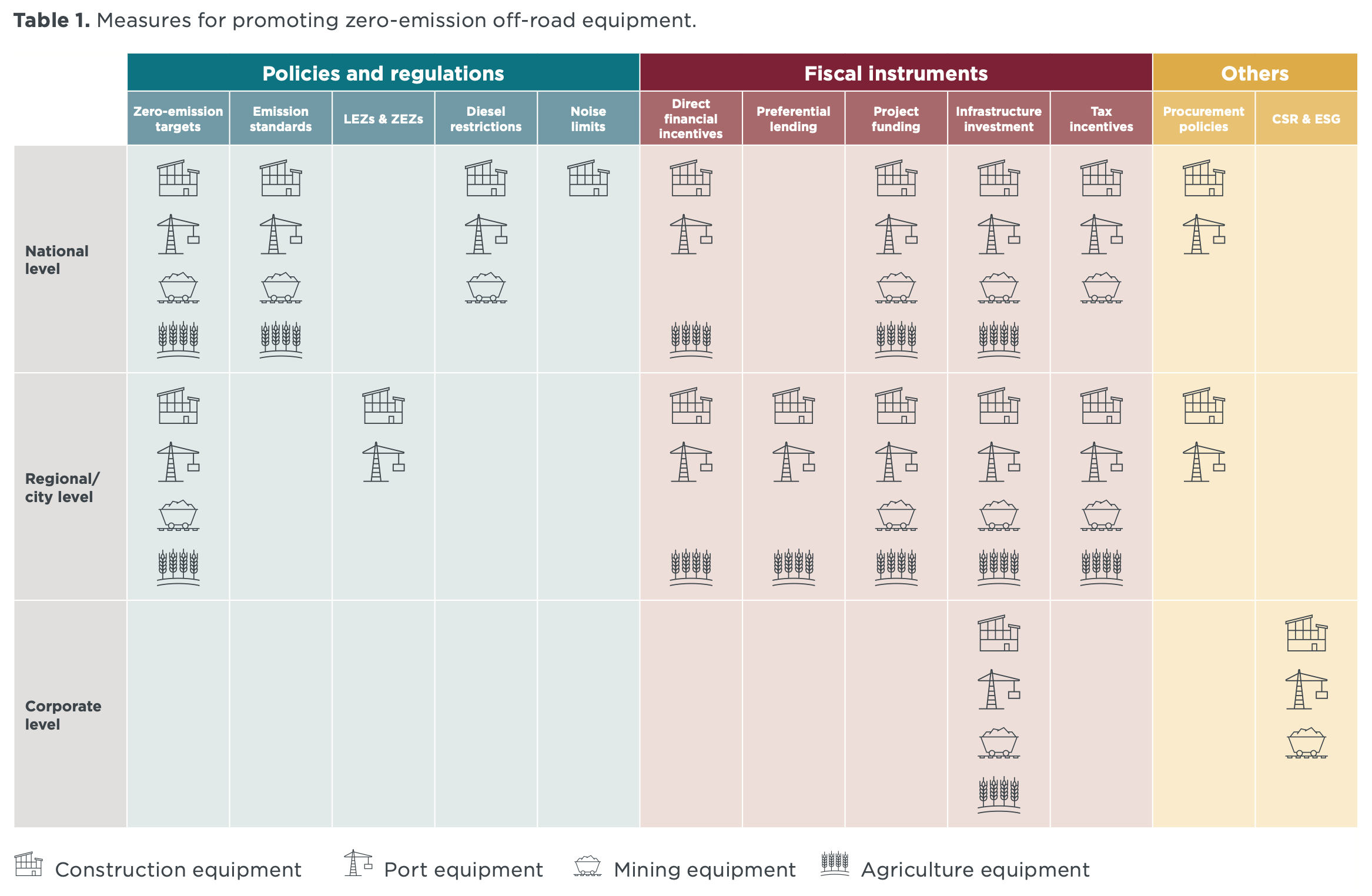
The ICCT’s comprehensive briefing outlines several key measures to encourage the adoption of zero-emission off-road equipment. These measures span across different categories:
- Policies and Regulations: This includes the establishment of zero-emission targets, emission standards, and the implementation of low- and zero-emission zones. Notable examples include California’s target for a fully zero-emission off-road fleet by 2035 and New York’s 2025 goal for 100% zero-emission sales of new off-road equipment, which currently remains non-binding.
- Fiscal Instruments: The briefing emphasises the role of direct financial incentives, preferential lending, and project funding in lowering the initial cost barriers associated with zero-emission equipment. California’s Clean Off-Road Equipment (CORE) Voucher Incentive program and the Netherlands’ subsidy scheme for clean construction equipment are highlighted as leading examples.
- Market Mechanisms and Industry Strategies: The briefing also points out the importance of procurement policies and corporate social responsibility (CSR) and environmental, social, and governance (ESG) strategies in driving the market towards zero-emission equipment. Initiatives like the Big Buyers Initiative in Europe and various corporate commitments to emission reductions play a pivotal role in this transition.
The briefing further discusses the challenges and opportunities in this sector, noting the lack of clarity in market size, inventory, and cost characteristics of off-road equipment in many regions. It calls for building comprehensive databases and inventories to aid in setting feasible goals and developing effective policy measures.
Conclusion and Policy Implications
In conclusion, the ICCT briefing serves as a crucial guide for policymakers and industry stakeholders. It underscores the necessity of a multi-faceted approach that combines regulatory measures, financial incentives, and collaborative strategies to effectively drive the transition towards zero-emission off-road machinery. As the briefing suggests, a concerted effort is essential to achieve the significant environmental benefits of reducing emissions from this sector.
Source: Incentivising zero-emission off-road machinery | The ICCT