Traditional measures for resiliency during power outages, such as generators, come with serious drawbacks. These include permitting use restrictions, potential failure due to infrequent use, interrupted fuel supply during natural disasters, and harmful greenhouse gas emissions. In light of these challenges, this report advocates for microgrids as a more effective and sustainable solution for ZEB fleets over conventional resiliency approaches.
Microgrids provide the capability to “island” or fully disconnect from the utility grid and continue generating power using a wide range of distributed energy resources (DERs) and energy storage assets. DERs may include solar panels, wind turbines, and stationary fuel cells, while energy storage assets typically involve batteries. By utilizing this combination of resources, microgrids can provide power to specific loads while also storing excess energy for later use. This design not only ensures an uninterrupted power supply but also offers asset diversification, reducing reliance on generators as the sole backup energy source.
The benefits of microgrids
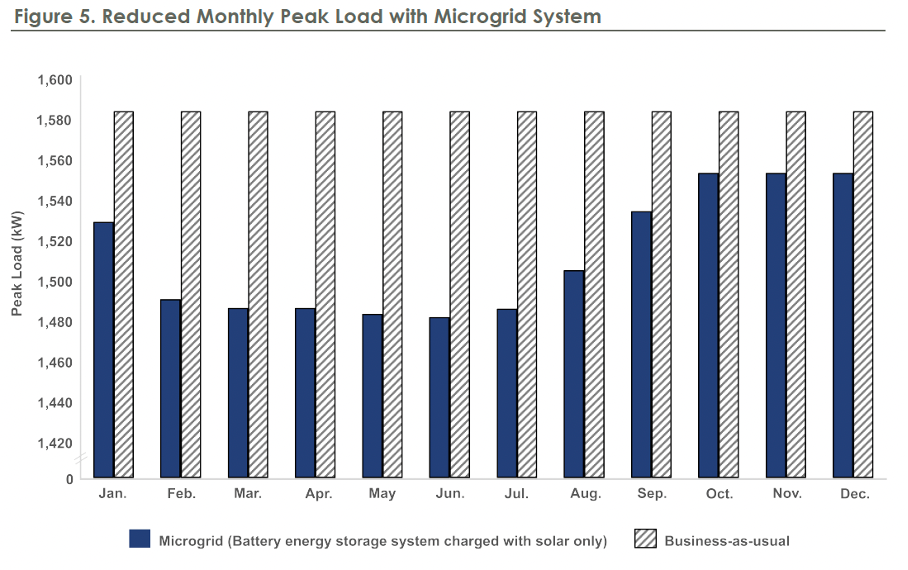
One of the most significant benefits of microgrids is their ability to perform peak shaving. During periods of low energy demand, microgrids store self-generated energy. When buses require charging, the microgrid can deploy this stored energy, further reducing power demand. Peak shaving has major financial implications, as it helps to decrease demand charges for the fleet, resulting in significant operational cost savings.
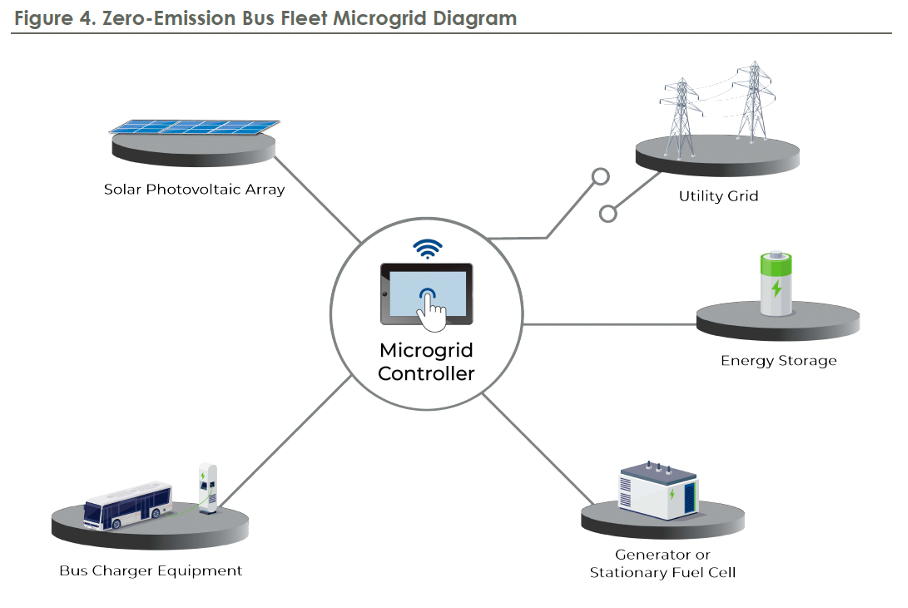
Microgrids offer a novel application for zero-emission transportation, and several transit microgrid projects are already underway across the nation, with some demonstrating successful implementation. For instance, Blue Lake Rancheria (BLR), a federally recognized tribal government in California’s Humboldt Bay area, deployed DERs in the form of a microgrid with a low-carbon backup power system to address potential power supply disruptions caused by natural disasters.
This microgrid not only saves BLR approximately $200,000 in utility costs annually, but also proved its resilience during recent blackouts caused by a 6.4-magnitude earthquake and heavy winter storms, powering critical infrastructure and facilities for over 24 hours.
Successfully implementing microgrids
For transit agencies to successfully implement microgrids, they must consider several high-level factors on a project-by-project basis.
- Firstly, agencies must determine the specific purpose of the microgrid and identify the type of emergency it is meant to respond to, estimating the duration of potential outages.
- Secondly, they need to pinpoint critical loads that require continuous power during grid outages, such as buildings, maintenance bays, data servers, safety equipment, and the number of vehicles needing access to power during an outage.
- Thirdly, transit agencies must select acceptable energy assets for their microgrid, evaluating options like natural gas or diesel generators and conducting studies to determine the optimal solar and battery storage capacity for the site.
- Fourthly, agencies need to calculate energy consumption and power demand by analyzing utility bills, using route modeling, or analyzing telematics or charger data.
- Finally, they must use microgrid modeling software to size components and develop a conceptual design that meets calculated energy consumption and power demands.
A compelling alternative
The increasing adoption of zero-emission buses calls for resilient and sustainable power solutions for transit fleets. Microgrids offer a compelling alternative to traditional resiliency measures, providing uninterrupted power supply, asset diversification, and peak shaving capabilities. Transit agencies must carefully consider various factors when implementing microgrids to ensure successful integration and optimize energy consumption for both financial savings and environmental benefits. As electricity demands and costs continue to rise in the coming decade, microgrids present a promising pathway towards a greener and more resilient future for public transportation.
Get ‘free of charge’ access to more than 650 valuable EV Market Insights via www.EVMarketsReports.com, the world’s largest e-Mobility Reports and Outlooks database. Enjoy reading!