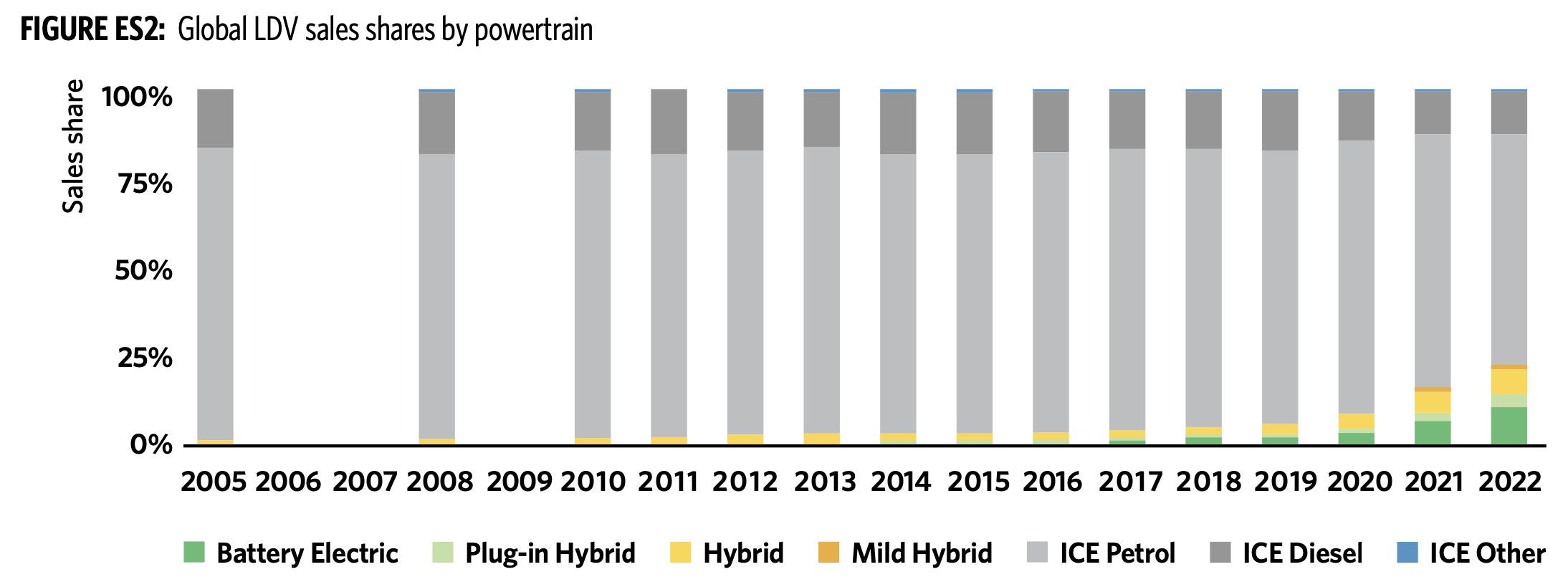
The report reveals a significant increase in energy efficiency in markets with rising electric vehicle (EV) sales, particularly in China and Europe. These regions saw an annual efficiency improvement of nearly 6%, far outpacing the global average of 3.2%. In contrast, North America’s lower EV adoption rate and preference for larger vehicles led to a modest yearly improvement of 1.6%.
A notable trend is the global surge in SUV sales, which in 2022 accounted for 51% of all vehicle purchases. This shift towards heavier and larger vehicles has implications for fuel efficiency and environmental impacts. The average weight of new vehicles has reached a record high of 1530 kg, with vehicle footprint stagnating at about 4.2 m².
The report underscores the contrasting effects of two major market trends: the increase in SUV sales and the transition towards EVs. While the SUV trend has led to increased oil consumption and CO2 emissions, the rise of EVs, which are significantly more energy-efficient than internal combustion engine vehicles, offers a counterbalance.
However, the report notes that electric vehicles tend to be heavier than their combustion counterparts, contributing to the overall increase in vehicle weight. This trend poses challenges for energy efficiency and underscores the need for targeted policy measures.
The GFEI report offers a range of policy recommendations to manage these trends. These include the adoption of technical standards, increased availability of low-carbon electricity, removal of fossil fuel subsidies, and regulatory mechanisms to address vehicle size and weight. Proposals include caps on vehicle footprint, corporate-average regulatory requirements, and fiscal measures to steer the market away from SUVs and towards EVs.
Additionally, the report emphasizes the need for equitable transition policies that consider the financial constraints of households and businesses, particularly in developing economies. Financial instruments and sustainable finance frameworks are suggested to facilitate broader access to EVs and support an inclusive transition.
This comprehensive analysis by the GFEI not only provides a detailed overview of current trends in the global vehicle fleet but also lays out a roadmap for balancing automotive industry developments with environmental sustainability and equity considerations.
Source: Trends in the global vehicle fleet 2023 | Global Fuel Economy Initiative