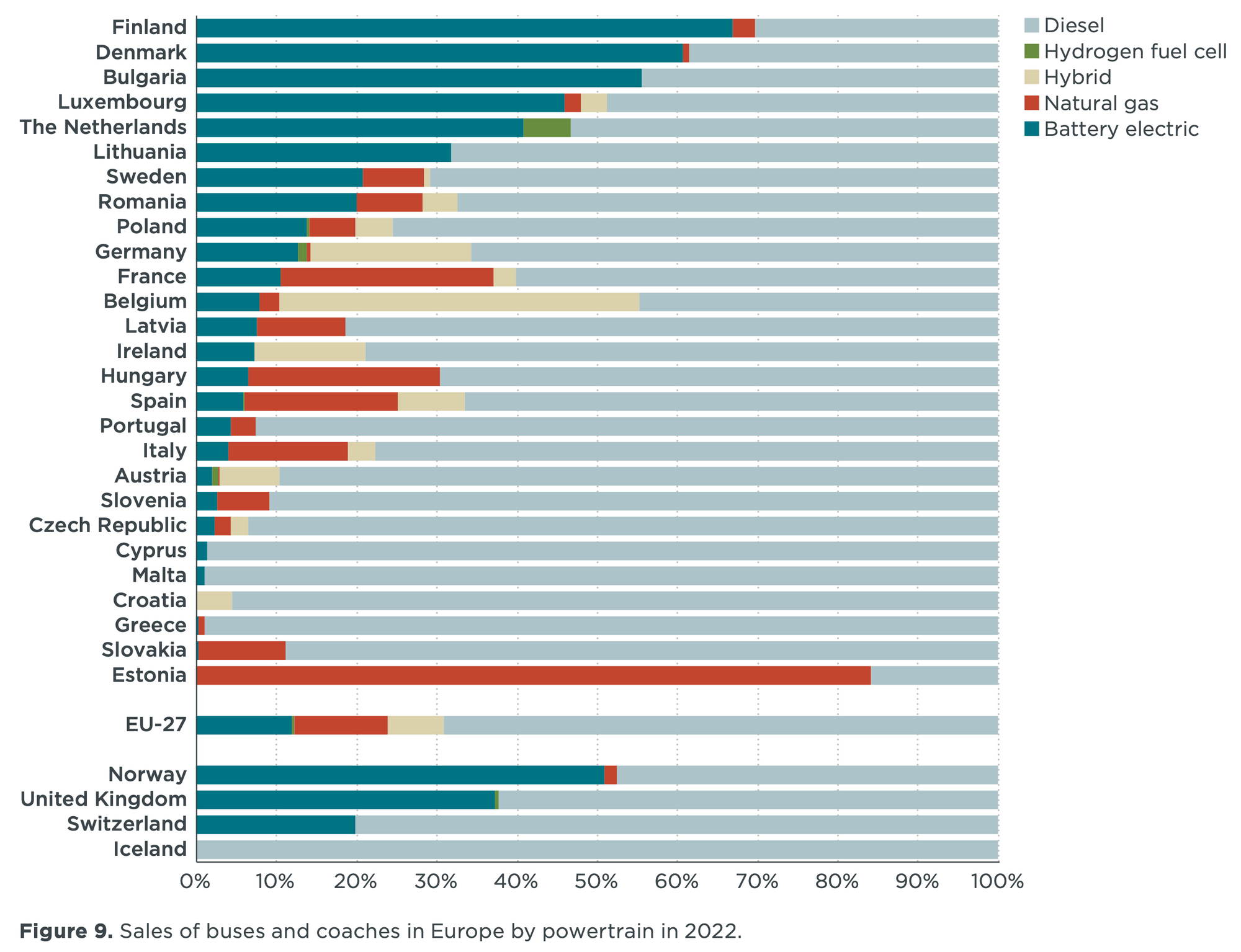
In 2022, the zero-emission bus and coach market in Europe experienced a remarkable surge, with over 3,000 zero-emission city buses sold. These vehicles accounted for nearly 30% of all buses sold that year, reflecting a significant increase from 2021 figures. The primary driver behind this surge appears to be the introduction of the Clean Vehicles Directive, which mandated public procurements to purchase between 24% and 45% of alternatively fueled buses between August 2021 and December 2025. Crucially, half of these targets had to be met through zero-emission vehicle purchases, further boosting the adoption of cleaner technologies in urban transportation.
When examining the European landscape, we observe disparities among member states in their adoption of zero-emission buses and coaches. In 2022, Finland, Denmark, and Bulgaria led the charge with a majority of sales in battery electric buses. These countries were quick to embrace the benefits of electrification, reducing emissions and noise pollution in their city centers.
Conversely, most coaches in Europe continued to be powered by diesel, and only a small share of interurban buses were fueled by natural gas. However, the tide is gradually turning as awareness of environmental impacts grows, and new regulations push for cleaner alternatives.
Fuel cell technology made its presence felt in the European bus and coach market, albeit with a small but notable share. In 2022, around 100 fuel cell buses were sold, with the majority finding their way onto European roads in Germany and the Netherlands. The expansion of fuel cell-powered vehicles, albeit at a slower pace than battery electric counterparts, underscores the industry’s commitment to exploring diverse zero-emission options.
Across Europe, various national initiatives played pivotal roles in driving the adoption of zero-emission buses and coaches. Estonia stood out with an impressive share of natural gas buses, accounting for over 80% of its fleet. France, Spain, and Italy also continued to invest in natural gas technologies, showcasing a commitment to diversifying fuel sources and reducing emissions.
The landscape of zero-emission buses and coaches in Europe is rapidly evolving, with a growing emphasis on sustainable transportation. The surge in sales of battery electric city buses, fueled by the Clean Vehicles Directive, signals a significant shift towards a greener future for urban mobility. While challenges remain, such as disparities among member states and varying technology adoption rates, the progress made in 2022 provides a hopeful glimpse into a cleaner and more sustainable public transportation system for the continent. As Europe continues its journey towards reducing emissions and combatting climate change, the role of zero-emission buses and coaches is set to become increasingly vital.
Source: Zero-emission bus and truck market in Europe: A 2022 update | ICCT