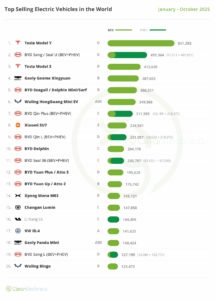
During the first half of 2023, Tesla dominated the market with an impressive performance, surpassing the combined BEV sales of the next 14 automotive groups by a margin of 122,000 vehicles. Every second BEV sold in the United States during Q2 2023 was a Tesla, underlining the electric automaker’s continued prominence in the market.
Counterpoint Research noted, “Building on the existing momentum, the US automotive industry maintained its upward trajectory in Q2 2023. Total passenger vehicle sales surged by over 16% YoY. BEV sales are on the rise, driven by the EV tax credit and increasing environmental awareness among consumers.” A notable highlight was that US-based brands, including Tesla, GM, Ford, Rivian, Lucid, and Karma, collectively captured nearly three-quarters of total BEV sales.
Foreign-origin brands also made significant strides in the US BEV market, with European manufacturers claiming the largest market share, followed by South Korean and Japanese brands. Remarkably, BEV sales by foreign brands more than doubled year-over-year, reaching nearly 81,000 units.
The five best-selling BEV models in the US accounted for more than 60% of the market’s total BEV sales during the quarter. Tesla’s Model Y and Model 3 alone made up a substantial 55% of the BEV market share. The Rivian R1T, marking its debut in the top five, secured the third position during Q2 2023.
Looking ahead, Counterpoint Research predicts that if the current growth trajectory continues, annual BEV sales in the US could exceed 1 million units by the end of 2023. However, an impending challenge lies in the form of rising inventories, which could potentially strain automakers. With EV-related investments by auto OEMs already exceeding $100 billion and the launch of new models planned from 2024 onwards, addressing these inventory challenges will be paramount.
To mitigate this issue, OEMs may be forced to make difficult decisions, potentially involving price reductions or production limitations, both of which could impact their financial performance. The balance between meeting soaring demand and maintaining sustainable inventory levels remains a delicate task for the rapidly evolving US BEV market.
In conclusion, while the US BEV market continues to thrive and innovate, the industry must navigate the intricate path of maintaining supply-demand equilibrium to sustain its impressive growth trajectory.
Source: Counterpoint Research